
Cuenta Contacto
Tu carrito
Envío con DPD y FedEx
¿Dudas? Pregunte a la IA

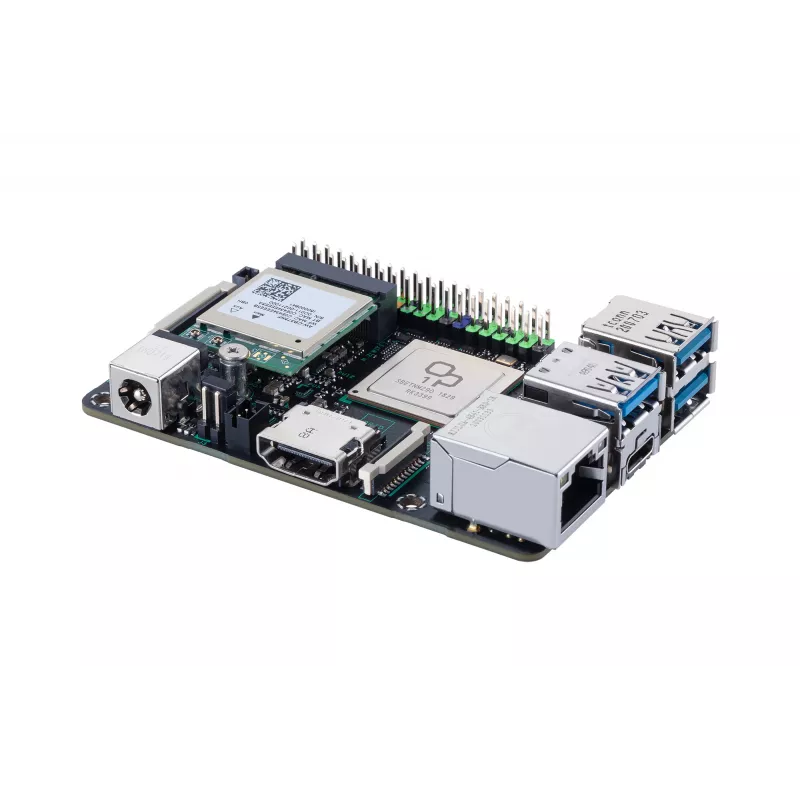
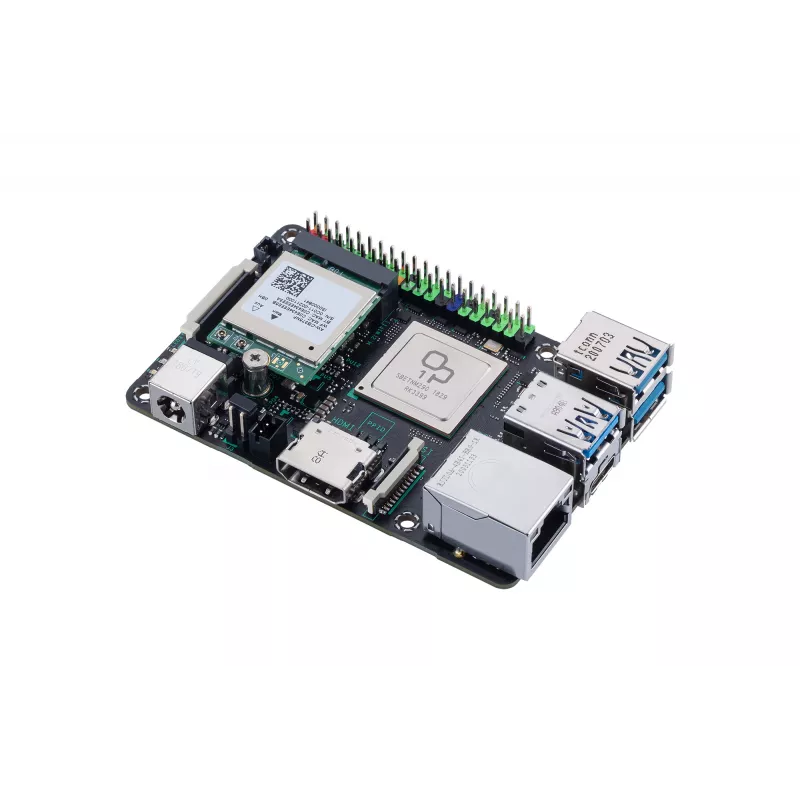
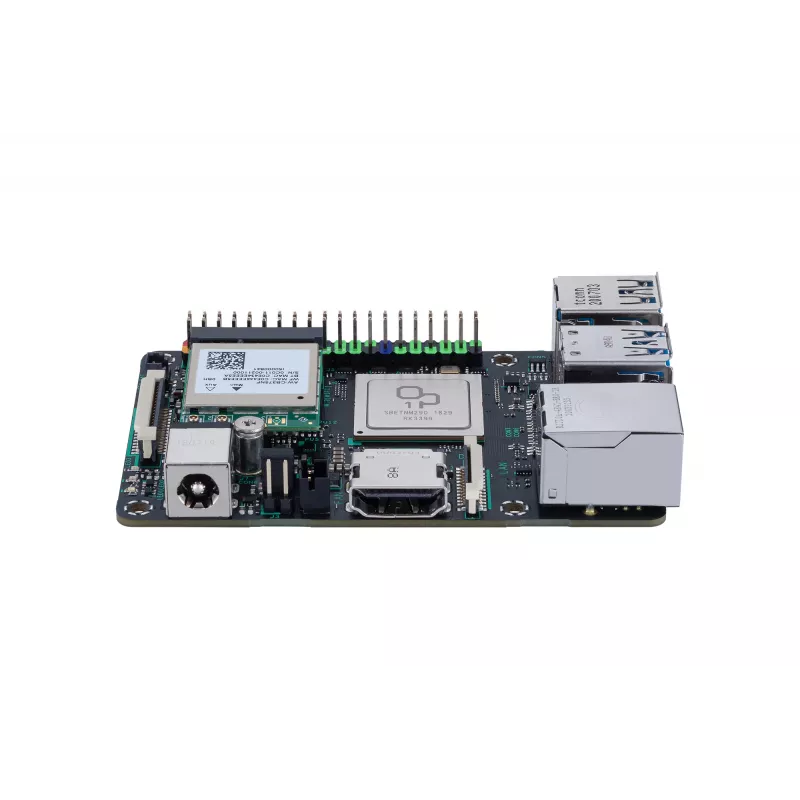
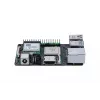
Placa de desarrollo ASUS Tinker Board 2S RK3399 2000 MHz

Placa de desarrollo ASUS Tinker Board 2S RK3399 2000 MHz
109,30 €
ULTIMATE PERFORMANCE FOR IOT DEVICESEnhanced CPU performancePowered by Arm® 6-core system on a chip (SoC), with the new 64-bit Armv8 architecture — the Rockchip RK3399 — Tinker Board 2S offers significantly improved performance versus compared to other popular SBC boards. It also features Arm big.LI... Leer más
Stock AgotadoSin stock Código 2184694 Marca ASUS Modelo 90ME01P0-M0EAY0 Garantía 2 años

Envíos y devoluciones

ULTIMATE PERFORMANCE FOR IOT DEVICES

Enhanced CPU performance

Powered by Arm® 6-core system on a chip (SoC), with the new 64-bit Armv8 architecture — the Rockchip RK3399 — Tinker Board 2S offers significantly improved performance versus compared to other popular SBC boards. It also features Arm big.LITTLE technology, which is a heterogeneous processing architecture that pairs two very different processors together in a single SoC. The big.LITTLE software automates task allocation, ensuring the right CPU core for each process. The upshot is that Tinker Board 2S delivers up to nearly twice the performance of the original Tinker Board, and is significantly faster than many competing SBCs.

Enhanced GPU performance
The GPU bundled with Tinker board 2S is Mali-T860, a multi - core GPU that is the highest performance model built on Arm's Midgard architecture. Specifically, Mali-T860 is designed for complex graphics use cases, and offers full support for OpenGL ES 3.0/3.1, OpenVG 1.1, OpenCL and other frameworks for next-generation and legacy 2D/3D graphics applications. Compared to the original Tinker Board, Tinker Board 2S' Mali-T860 GPU accelerates graphics performance by up to 28%.

DUAL-DISPLAY SUPPORT
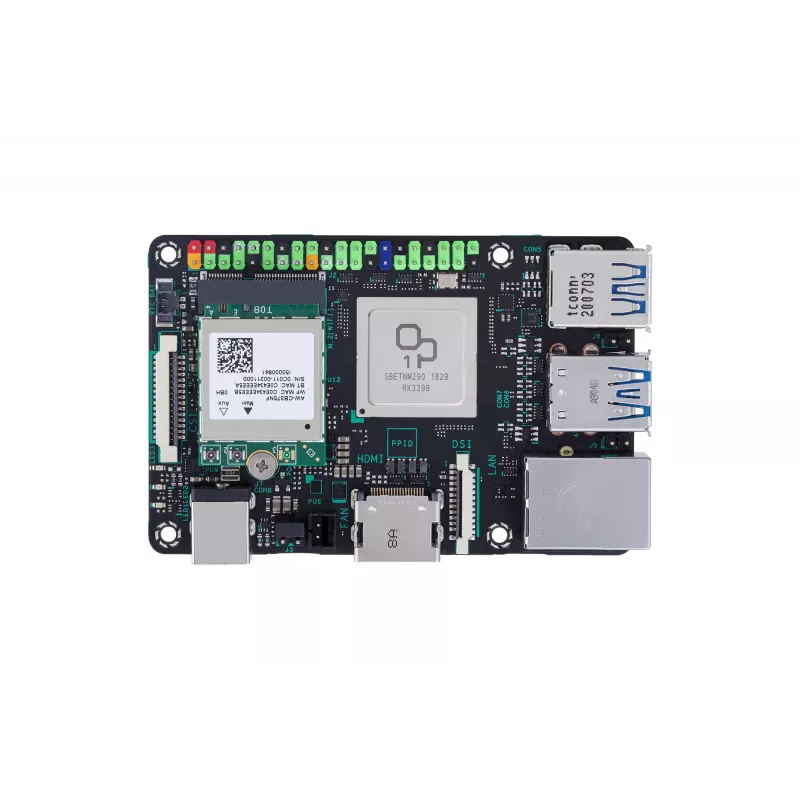
Tinker Board 2S supports dual displays at up to 4K UHD resolution, so it's equipped for compelling visual output. It also has three popular display interfaces built in, including HDMI, DisplayPort over USB-C and DSI, for superb flexibility.

WI-FI AND BLUETOOTH
Next-level 802.11ac Wi-Fi with 2x2 dual-band 2.4/5 GHz antennas deliver transfer speeds that are up to 10X faster than previous Wi-Fi standards. Tinker Board 2S also has the latest Bluetooth 5.0 technology built in, so you'll enjoy speeds that are up to 2X transmit speeds and with up to 4X-greater range. Integrated Bluetooth also opens up the convenience and freedom of wireless connectivity with a wide range of devices, including speakers, headphones and game controllers.

RICH CONNECTIVITY: USB 3.2 GEN 1
Tinker Board 2S has three USB 3.2 Gen 1 Type-A ports and one USB 3.2 Gen 1 Type-C (USB-C) port, for data-transfer speeds that are up to 10X faster than USB 2.0 - plus the convenience of any-way-up connectivity. Tinker Board 2's USB 3.2 Type-A ports delivers up to 0.9A of power, while the USB-C connector supplied up to 1.5A, for charging speeds that are considerably faster than older USB 2.0 ports. The USB 3.2 Gen 1 Type-C supports OTG functionality and DisplayPort Alt Mode for DP alt mode to connection of an external displays.

EXPANDABILITY FOR EMBEDDED SOLUTIONS

RTC battery header
Enables real-time clock (RTC) functions for scheduling of startup and shutdown, timers and other related functions. Also enables ability for the system clock to keep time when mains power is lost or otherwise unavailable.

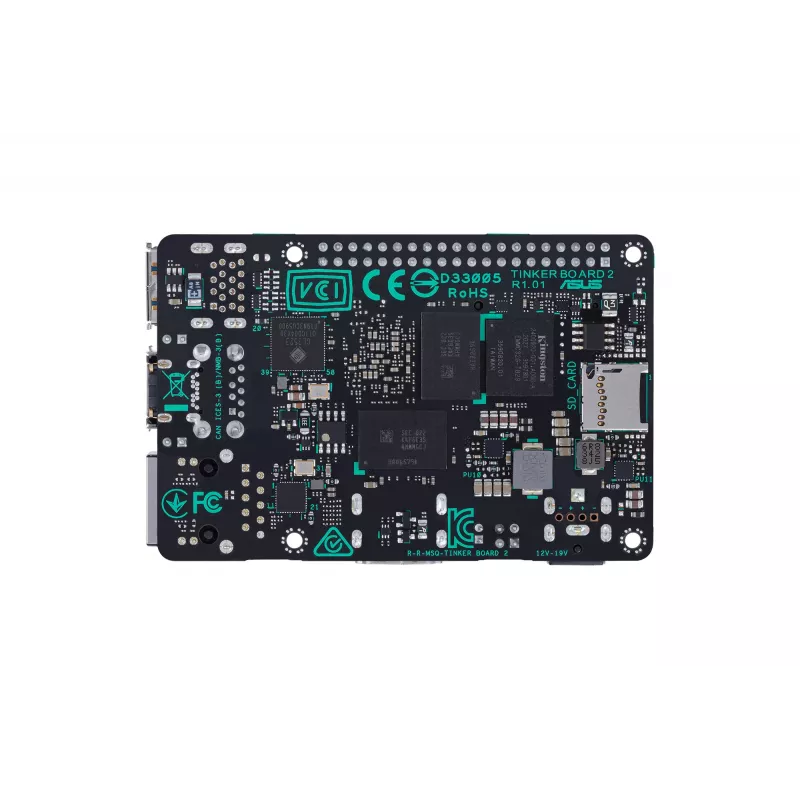
SD card slot (rear side)
Simple push-pull operation
Spring-free design prevents accidental ejection for greater reliability

Fan connector
Integrated 2-pin header provides easy upgradeability for advanced cooling needs

COMPREHENSIVE PROTECTION

Short-circuit damage prevention
Onboard power IC and polyswitch prevent overcurrent and short-circuit damage, protecting the lifespan both of Tinker Board 2S and connected devices

Electrostatic discharge protection
ASUS ESD Guards prolong the life of components while preventing damage from electrostatic discharge, providing protection for up to +/- 15kV of air discharge and +/- 8kV of contact discharge

Overvoltage protection World-class circuit-protecting power design
An exclusive circuit design with built-in voltage regulators protects Tinker Board 2S from damage caused by unexpected high-level voltages from unstable or inferior power supplies.

ASUS Tinker Board 2S. Processor manufacturer: Rockchip, Processor model: RK3399, Processor frequency: 2000 MHz. Maximum internal memory: 2 GB, Internal memory type: LPDDR4-SDRAM, Memory channels: Dual-channel. USB version: 3.2 Gen 1 (3.1 Gen 1), Wi-Fi standards: Wi-Fi 5 (802.11ac), Ethernet interface type: Gigabit Ethernet. On-board graphics card model: ARM Mali-T860 MP4. DC input voltage: 12 - 19 V

How to use

Install an appropriate operating system image on the SD card and insert it into the rear SD slot, connect power via a DC supply within the 12–19 V range, and attach displays using HDMI, USB‑C DisplayPort Alt Mode or the DSI connector. Connect peripherals to the USB Type‑A or Type‑C ports and configure network connectivity via Wi‑Fi or Ethernet. Use the RTC battery header if persistent timekeeping is required, and attach a small fan to the 2‑pin header for active cooling under sustained high load.

Recommendations

Use a stable, high-quality power supply within the specified voltage range to avoid overvoltage events, enable ESD precautions when handling the board, and choose USB 3.2 cables and compatible displays that support DisplayPort Alt Mode for reliable high-speed data and dual‑display operation.

Aspectos destacados
  • Embedded development and prototyping
  • Multimedia and graphics projects requiring 4K output or accelerated 3D
  • IoT devices and edge computing with network connectivity
  • Applications needing USB 3.2 high-speed I/O and DisplayPort over USB‑C
  • Processor: Rockchip RK3399, 6-core Arm SoC (64-bit Armv8)
  • Memory: up to 2 GB LPDDR4, dual-channel
  • Graphics: ARM Mali‑T860 GPU (supports OpenGL ES 3.0/3.1, OpenVG 1.1, OpenCL)
  • Display: Dual-display support up to 4K UHD; interfaces include HDMI, DisplayPort over USB‑C and DSI
  • Wireless: Wi‑Fi 802.11ac (dual-band 2x2), Bluetooth 5.0
  • USB: Three USB 3.2 Gen 1 Type‑A ports and one USB 3.2 Gen 1 Type‑C port (OTG, DisplayPort Alt Mode)
  • Ethernet: Gigabit Ethernet
  • Power: DC input 12–19 V
  • Expansion: SD card slot (rear), RTC battery header, 2‑pin fan connector
  • Protection: Short‑circuit and overcurrent protection, ESD protection, overvoltage protection circuitry
Especificaciones
Altura
85 mm
Ancho
56 mm
Bluetooth
Yes
Canales de memoria
Dual-channel
Capacidad eMMC
16 GB
Estándares wifi
Wi-Fi 5 (802.11ac)
Ethernet LAN
Yes
Fabricante del procesador
Rockchip
Frecuencia del procesador
2000 MHz
Humedad relativa de funcionamiento (H-H)
0 - 85%
Interfaz GPIO
Yes
Interfaz I2C
Yes
Interfaz I2S
Yes
Interfaz PCM
Yes
Interfaz SPI
Yes
Memoria interna máxima
2 GB
Modelo de tarjeta gráfica integrada
ARM Mali-T860 MP4
Modelo del procesador
RK3399
Núcleos del procesador
6
Número de puertos HDMI
1
Número de puertos USB
4
Número de puertos USB 3.2 Gen 1 (3.1 Gen 1)
4
Puertos Ethernet LAN (RJ-45)
1
Salida S/PDIF
Yes
Tarjeta gráfica integrada
Yes
Tarjetas de memoria compatibles
MicroSD (TransFlash)
Temperatura de almacenamiento (T-T)
-40 - 85 °C
Temperatura de funcionamiento (T-T)
0 - 60 °C
Tensión de entrada de CC
12 - 19 V
Tipo de conector de audio
I2S
Tipo de interfaz Ethernet
Gigabit Ethernet
Tipo de memoria flash
eMMC
Tipo de memoria interna
LPDDR4-SDRAM
Versión de Bluetooth
5.0
Versión de USB
3.2 Gen 1 (3.1 Gen 1)
Wifi
Yes
El historial de precios aún no está disponible
Todavía estamos recopilando suficientes datos de precios diarios de este producto.

Análisis independientes de medios tecnológicos

tomshardware.comLes
4/10

“What is a computer without a community? Every computer has had some form of community behind it. From the explosion of home computers in the 1980s, to the present day, there have been users who have come together to support and evangelise for their…”

Pros
  • Compact Size
  • USB C
  • USB 3
Contras
  • No GPIO Python library
  • Poor Wi-Fi
  • Software support is woeful
  • Slow eMMC
Lee el análisis completo en tomshardware.com →

Productos populares en esta categoría

Hola, soy el asistente de IA de DistriNode. Puedo ayudarte a encontrar productos, comparar opciones, crear presupuestos en PDF o abrir solicitudes de soporte.